

VRF or VRV?
Both are correct. VRF, also known as VRV, is an air-conditioning technology developed and patented by Daikin in the 1980s. Because Daikin patented the name VRV, other companies in the sector called their systems VRF. Variable Refrigerant Volume or Variable Refrigerant Flow describes a technology that heats or cools spaces by adjusting refrigerant flow according to user input and outdoor conditions. We use the general term VRF here.
How Does the System Work?
Similar in principle to multi-split air conditioners, this ductless system connects several indoor units to one outdoor unit. It saves substantial space and can allow different areas to be heated and cooled simultaneously. Different types and capacities of indoor unit can be installed as required.
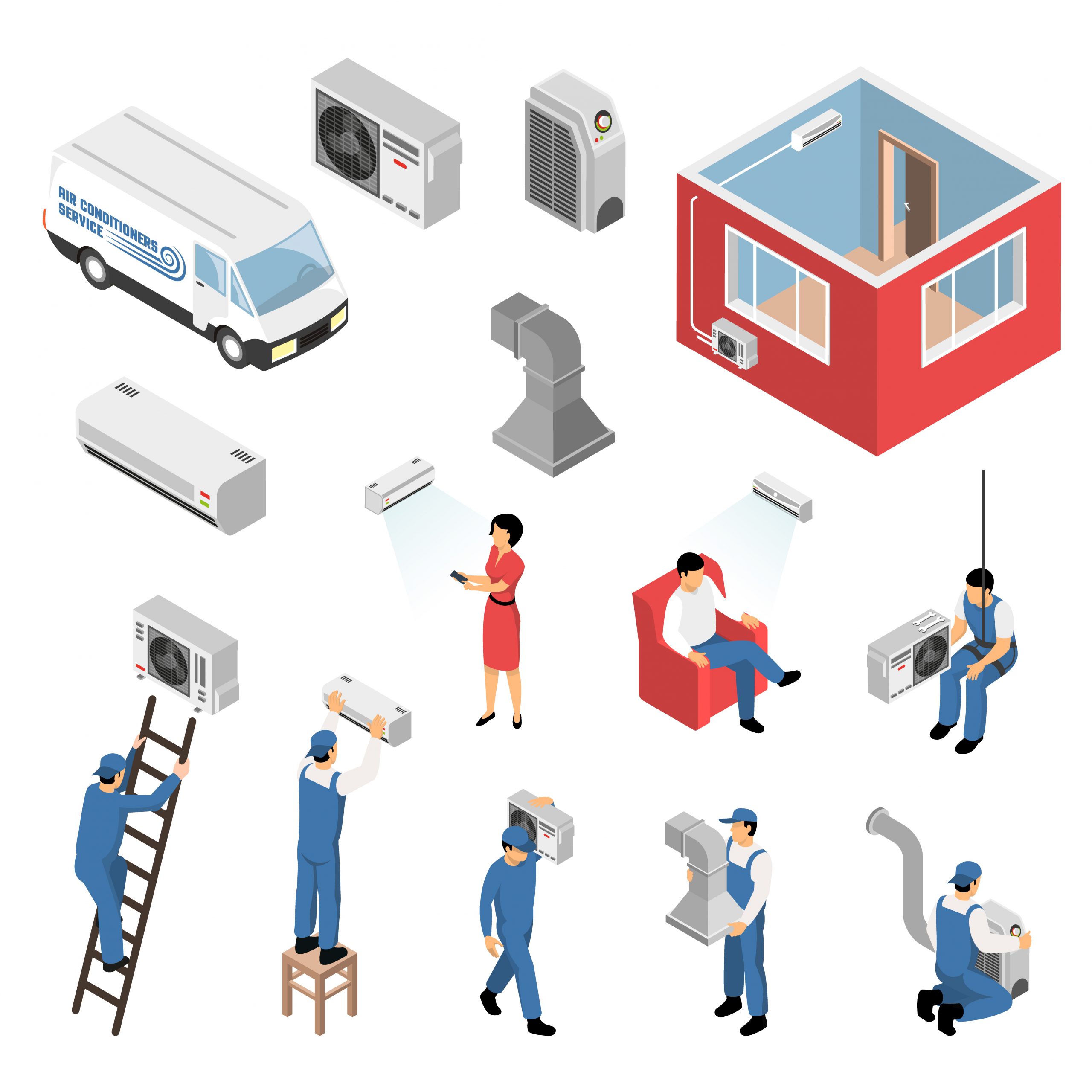
The main system components are:
- An outdoor unit
- Independent indoor units of types suited to their spaces
- Piping and connection components
- Electrical and communications wiring
- A control panel and controls
Each indoor unit can be controlled using its own panel, a smartphone or tablet, or from a central point. Based on combined indoor demand and environmental data, the outdoor unit adjusts refrigerant volume and temperature using an inverter compressor. Conventional compressors cycle on and off; inverter systems vary motor and compressor speed by changing frequency. Much like a car’s accelerator, capacity changes with the load. Running only at the required capacity can save considerable energy.
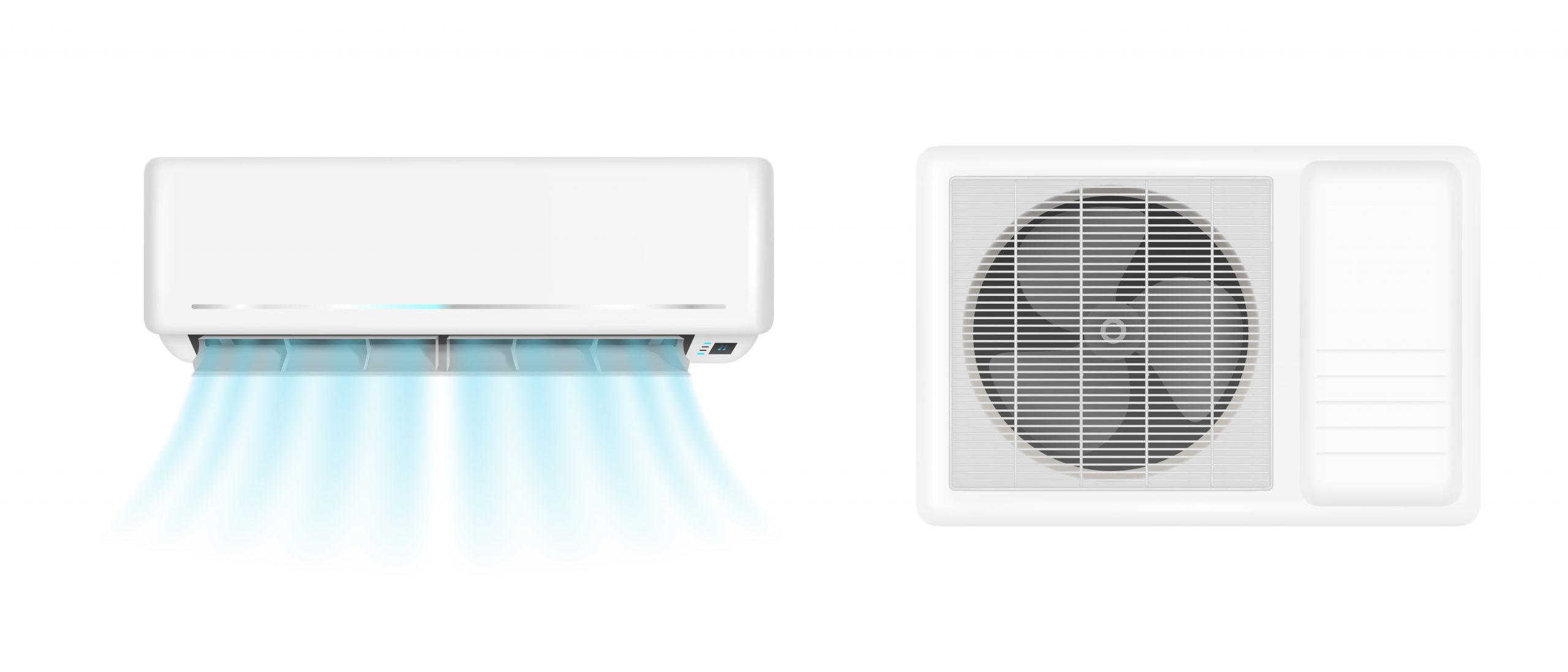
VRF systems are broadly air-cooled or water-cooled; air-cooled systems are more common in Türkiye and worldwide. Refrigerant passes through indoor coils while indoor air flows over them; the coils act as an evaporator. The refrigerant absorbs indoor heat, cooling the room, and returns to the outdoor unit, where the compressor increases its pressure and the coils release heat to the atmosphere. It returns to cool the room again. In heating mode the process reverses: hot refrigerant transfers heat indoors, then travels outdoors to draw atmospheric heat and condense. The compressor increases its pressure and the refrigerant carries the absorbed heat indoors again.
VRF systems can be divided into two-pipe heat-pump and three-pipe heat-recovery systems. In a two-pipe system, room temperatures can be set separately but all areas heat or cool at the same time; one indoor unit cannot heat while another connected to the same outdoor unit cools. In a three-pipe system, solenoid valves allow one indoor unit to heat while another cools. The article also describes a hybrid two-pipe VRF system developed by Toshiba with an integrated BC controller that can heat and cool, with nearly three times fewer pipes and connections than a three-pipe system.
Where Is It Used?
VRF can be chosen wherever suitable outdoor-unit space exists and multiple areas require conditioning. Typical applications include:
- Hotels
- Hospitals and clinics
- Office buildings
- Restaurants
- Stores
- Theaters and cinemas
- Buildings with glass curtain walls
- Historic buildings where architectural sensitivity is important and changes to the exterior are undesirable
- Buildings where it is difficult to route air ducts, which occupy much more space than refrigerant pipes
- Multi-room homes with high comfort expectations
Multi-tenant business centers and office buildings where tenants want separate conditioning bills and control of their energy use.
What Are the Advantages and Disadvantages of VRF?
Advantages include:
- Individual climate control
- Longer system operating life
- Overall comfort in multi-room buildings such as offices and hospitals
- Integrated control
- Design variety
- Minimal space requirements
- Energy savings
- Low noise
- Low operating costs
- A short investment payback period
- Self-contained systems without dependence on an external source
Disadvantages include:
- A suitable open area is needed for the outdoor unit
- The distance to the farthest indoor unit is limited (90 m)
- High initial installation cost
- Performance is affected by extreme outdoor temperatures: air-cooled heating capacity drops as air gets colder, and cooling capacity drops as it gets hotter
- Greater complexity than other systems
Why Is VRF Maintenance Important and How Is It Performed?
As with all systems, maintenance is required to keep VRF equipment efficient and extend its life. Depending on use, the article suggests a minimum of four and a maximum of twelve maintenance visits per year for optimum efficiency.
Regular maintenance can:
- Prevent potentially expensive failures
- Keep operating costs under control
- Prevent diseases that can spread through mold, fungi, bacteria and viruses in the system, such as Legionnaires’ disease
- Maintain energy efficiency
- Maintain indoor comfort
Standard VRF maintenance includes:
- Observe the indoor unit for vibration or abnormal noise
- Clean indoor air filters using an appropriate method and apply antibacterial liquid
- Inspect the indoor coil and wash with a specialized chemical if needed
- Clean the coil surface and inlet and outlet duct boxes with antibacterial liquid
- Check the unit slope and mounting connections
- Inspect the drainage line, clean the drain pan and place a drain tablet in it
- Inspect copper pipe connections and insulation
- Measure current values and compare them with normal operating values
- Check operating mode and setpoints using the control panel
- Check supply-air temperature and flow, measuring refrigerant if anything is unusual
- Straighten and clean outdoor coil fins with a specialized chemical
- Inspect the outdoor unit circuit board and clean it with corrosion-preventing liquid
- Run the unit at full capacity to confirm it operates, then complete maintenance
For more information and professional technical maintenance and repair support, contact us. In the next “What Is It?” article, where we introduce a different system each month, we discuss power factor correction.
Stay healthy and keep following us!
Note: Photographs are from tesisat.org.