
Regular measurement of sound, lighting and dust levels is a key facility management consideration for employee comfort, occupational health and operational efficiency. WHO, OSHA and similar international organizations identify these parameters among the core components of indoor environmental quality standards. In modern facility management, the measurements provide managers with data for risk management and performance analysis as well as comfort assessment.
Sound Measurements and Employee Performance
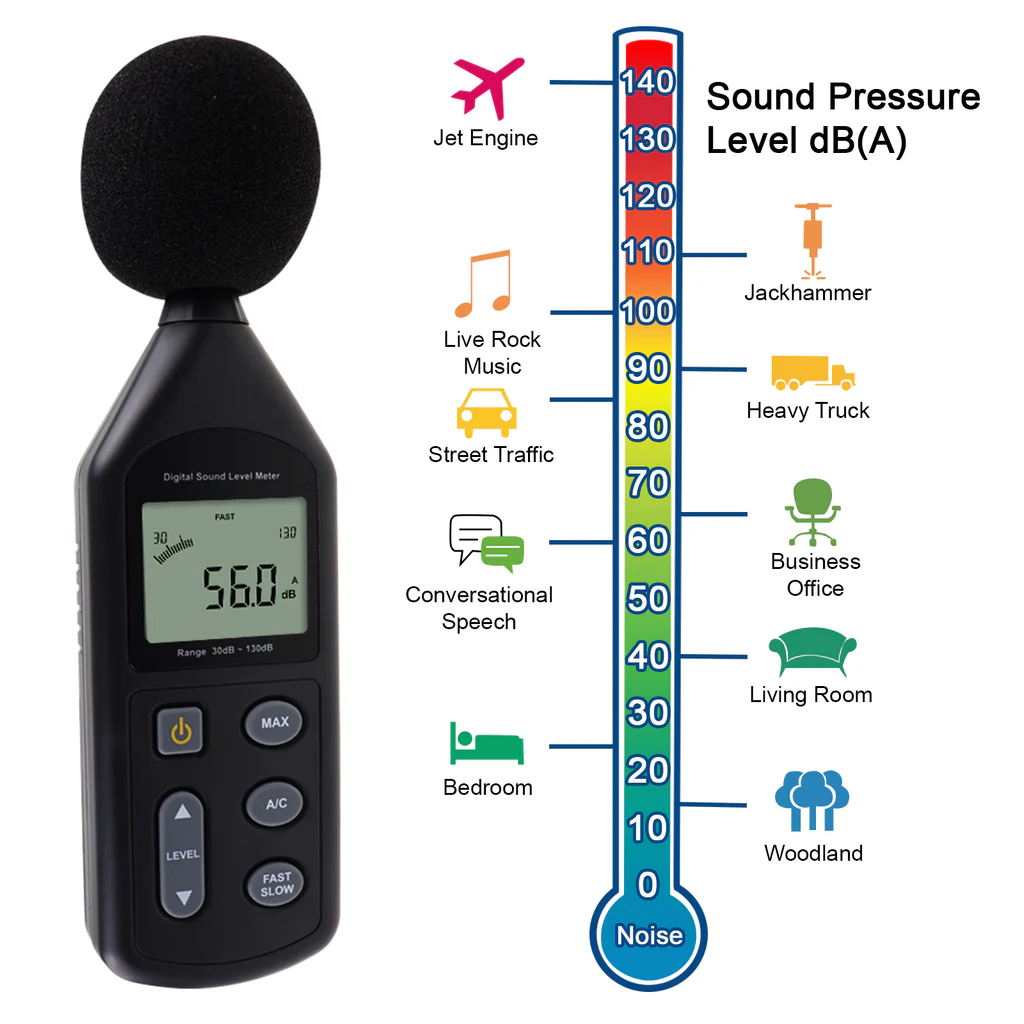
WHO’s Environmental Noise Guidelines state that prolonged noise exposure can lead to stress, loss of attention and reduced performance. The source also states that, according to OSHA, continuous noise above 55 dB adversely affects productivity in open-plan offices.
The article cites research indicating that noise can reduce cognitive performance by 10–15% and that error rates rise above 60 dB. It recommends periodic acoustic measurements, quiet work areas and small acoustic meeting spaces integrated with open offices for online meetings. Monitoring noise sources and creating risk maps can help reduce exposure, especially in shopping centers and open offices.

The Impact of Lighting Measurements on Occupational Health
The source reports that IES and EN 12464-1 standards recommend 300–500 lux for office workspaces. It states that insufficient lighting may increase eye strain by up to 20%, while excessive lighting can reduce contrast and distract attention; it also cites international studies reporting that lighting optimization can improve productivity by 3–7%.
Zone-based, sensor-controlled LED systems support energy efficiency and consistent comfort. Regular lux-meter measurements and digitally managed fault and maintenance processes strengthen operational control across multiple sites.
Dust and Particle Measurements: Indoor Air Quality
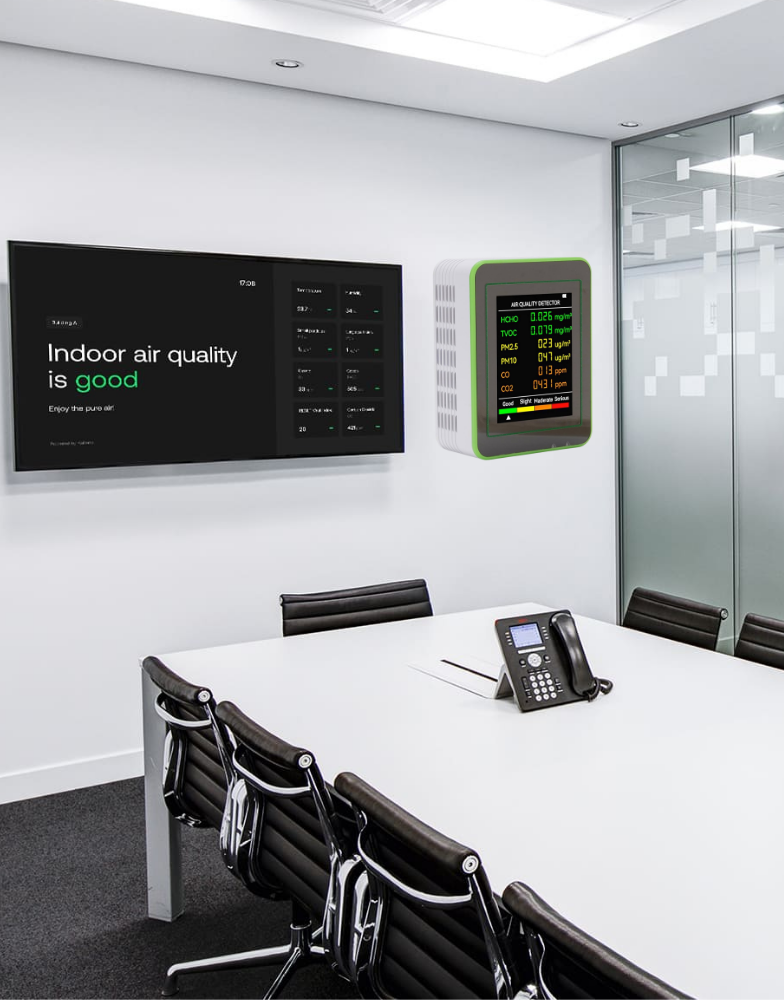
WHO Air Quality Guidelines highlight the effects of PM2.5 and PM10 particles on respiratory health. Increased particle levels can adversely affect employee health and HVAC performance. The source associates PM2.5 exposure with an 8–14% increase in conditions including respiratory diseases (asthma, COPD and bronchitis), cardiovascular disease, ischemic stroke and metabolic disorders. Higher particle concentrations can also increase equipment failure rates and threaten operational continuity.
Periodic filter replacement and duct cleaning, sensor-based measurements in high-dust areas and a green maintenance approach are therefore important operational steps.
A Holistic Approach to Comfort
Evaluating environmental comfort parameters together is a core principle of modern facility management. The WorldGBC Holistic Indoor Environmental Quality (IEQ) approach emphasizes that employee comfort depends on balanced, integrated management of environmental factors rather than a single element. This is an important determinant of sustainable operating performance in high-traffic facilities such as offices, shopping centers, retail chains and multi-site operations.
Benefits of a Holistic Comfort Approach
- Greater employee satisfaction: better focus, lower stress and a better work experience,
- Energy efficiency: optimized lighting and HVAC systems,
- Operational optimization: reduced failure rates,
- Consistency across multi-site operations: the same comfort level at every location.
Regular measurement and integrated management of environmental comfort parameters underpin safe, healthy and highly productive workplaces. Analyzing sound, lighting and air quality data and supporting it with professional maintenance enables better decisions. The approach can reduce current risks while helping optimize long-term maintenance costs, improve energy efficiency and support sustainability goals.