

Power outages occur in daily life because of problems at the electricity distributor, fluctuations in the grid or faults in electrical installations. Consider the work interrupted by a sudden outage, an important nearly finished document lost before it was saved, and the time and money spent recovering those losses. There is a solution whose name describes its purpose: an uninterruptible power supply (UPS), called kesintisiz güç kaynağı (KGK) in Turkish.
How does a UPS work? What types are there and what systems or devices use them? Do you still need a generator if you have a UPS? How often and how should a UPS be maintained? Read on for these answers and more.
How Does a UPS Work?
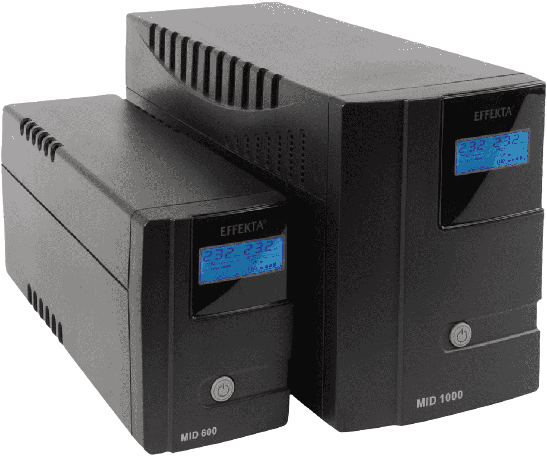
A UPS is a battery-backed device connected externally to your facility’s low-voltage system, usually located in a server room or electrical panel room. In simple terms, its batteries supply power in approximately 0–20 milliseconds during an outage, so connected devices do not experience an interruption.
A UPS does more than provide uninterrupted power. Depending on its type, it can also tolerate voltage fluctuations to a degree, extending the life of electronic equipment. Given the frequency of grid fluctuations in Türkiye, a UPS can protect computer software as well as hardware. During an outage or irregular supply, it allows you to keep computers and applications running and complete your work.

What Types of UPS Are There?
There are two main structural types: static and dynamic UPS.
- Static UPS:
Standby (Offline) UPS:
- While grid power is available, the load is supplied from the grid and the inverter remains on standby. When grid power fails, the inverter takes over and continues to supply the load.
- This is more suitable for single-user systems and may appeal to those seeking a simple, inexpensive UPS.
- These products will not protect a computer from grid fluctuations, but during an outage they provide enough time to save the document being worked on.
Line-Interactive UPS:
- While grid power is present, the inverter is inactive and the voltage regulation and battery charging circuits operate. The batteries and inverter take over on grid failure and supply the load.
- The batteries are charged when the grid is normal by operating the inverter in reverse.
- These systems are more secure than offline products.
- They protect against some risks and may be attractive because of low cost, but do not replace online systems that provide fuller protection.
Online UPS:
- The load is continuously supplied through the inverter whether or not grid power is present. When grid power is available, the batteries charge and the inverter, operating at grid frequency, supplies the load.
- Online models are expensive, but are particularly suitable for computers and other sensitive devices.
- With this type of UPS, the system is fully isolated from the grid, leaving unwanted grid conditions behind the online UPS.
Dynamic UPS:
Dynamic uninterruptible power supplies have a motor/generator at their output. Because the output comes from the motor, the resulting sine wave is close to ideal. These systems are used in large industrial facilities and critical applications.
Which Devices Should Be Connected to a UPS?
Sensitive equipment and systems whose continuity is important to a facility should generally be supplied through a UPS. The equipment varies by business; commonly protected critical loads include:
- Computers and computer-assisted automation systems
- Computer-controlled production machinery
- Electronic scales, doors, barcode devices and cash registers
- Medical devices
- Communications and automation systems
- Control systems such as CCTV, access cards and electronic locks
- Airport lighting and traffic control centers
- Alarm and warning systems
- Critical large-area lighting systems
- Defense systems
- Photo printing and processing equipment
Do We Still Need a Generator If We Have a UPS?
Having a UPS does not eliminate the need for a generator. Although both supply electricity, their purposes and functions differ. A UPS prevents interruption, while generators produce electricity to supply a facility during long outages. In other words, a generator provides continuous energy while it has fuel; a UPS is selected to provide up to three hours depending on its capacity and the consumption of connected systems.
A UPS’s principal task should be to allow equipment to shut down safely without interruption and protect hardware against dangers arising from grid voltage.
- A UPS engages immediately during an outage to prevent loss; generators engage on average about ten seconds after the outage.
- A UPS uses rechargeable batteries supplied from the grid while it is active; generators convert fuels such as diesel or gasoline into electricity.
- Generators and UPS units are often used together. A UPS initially supplies sensitive equipment without interruption; a generator then starts to meet the longer-term demand.
What Should You Consider When Selecting a UPS?
First identify the critical systems to be connected. Calculate the combined maximum power of servers, PCs, security panels and other devices to determine the required UPS capacity. Then select the UPS type according to system type and sensitivity.
Because UPS selection involves calculations and safety assumptions, seek help from a qualified technical team. Key considerations include:
- Input-voltage variation range
- Output-voltage continuity
- Overload protection
- Short-circuit protection
- Isolation from grid noise
- High reliability and low failure rate
- UPS output power
- Backup duration
- TÜV, UL, EMI and FCC compliance
- An established manufacturer and ongoing service
- For locally manufactured products, TSE certification; for imported products, quality certificates such as ISO 9001
- Long-life batteries, for example ten-year options
How Often and How Should a UPS Be Maintained?
Electronic equipment whose continuity and protection matter to your business is called a critical load in UPS terminology. Lost production can cost more in time and money than the purchase and operating cost of a UPS, making continuity and reliability essential.
Nevertheless, periodic maintenance of an expensive UPS is often seen as unnecessary or receives insufficient attention; the common approach is to spend only after failure. Regardless of capacity, if regular maintenance is neglected, the power supply purchased to protect critical loads can itself become a source of risk.
A minimum of two maintenance visits per year is recommended in this article, with frequency increased according to environment and UPS type. Basic work includes:
- Battery measurement, testing and inspection
- Fan cleaning and removal of internal and external dust
- Connection checks
- Cleaning and inspection of electronic boards
- Fault and history checks
- Grounding and installation checks
- Inspection of warning and signal lamps
We have outlined important UPS information. Remember that maintenance by qualified people at appropriate intervals is as important as having a UPS. In the next article of our “What Is It?” series, we ask “What Is an Air Curtain?”